




What's the Difference Between a Tethered and Untethered EV Charger?
If you are sourcing station hardware, assembling wallboxes, or setting up commercial Level 2 charging depots, you’ve likely hit this exact design junction: Should we build or install a tethered charger, or go with an untethered, socketed design?
While both configurations get power into an EV, the day-to-day user experience, hardware maintenance, and assembly requirements are miles apart. Picking the wrong route can mean endless customer service calls or unnecessary installation headaches down the line.
Let's look at how tethered and untethered EV chargers actually compare in real-world deployments—and why choosing a heavy-duty type 2 tethered ev charging cable setup as a primary wallbox component has become the standard choice for OEMs and commercial installers.
Tethered vs. Untethered EV Chargers: The Core Comparison
The physical distinction is simple enough: it comes down to whether the cable is built straight into the charger or left as a separate accessory.
Tethered EV Chargers: The cable is hardwired directly inside the charging station enclosure. Drivers just grab the handle, plug it into their vehicle, and walk away.
Untethered (Socketed) EV Chargers: The station only features an outlet socket. The driver has to haul their own loose type 2 ev cable out of the trunk, plug one end into the wall, and the other into the car.
The Practical Choice for Fleet & Commercial Depots
While socketed untethered stations are common in residential European driveways, tethered setups dominate commercial sites and fleet hubs—especially across North America. Why? Because no driver wants to rummage around in a wet trunk for a dirty cable in freezing rain or late at night. Tethered chargers make charging plug-and-play, while eliminating the risk of lost, damaged, or stolen cables at public or workplace sites.
Why OEMs & Installers Rely on Open-End Cable Components for Tethered Wallboxes
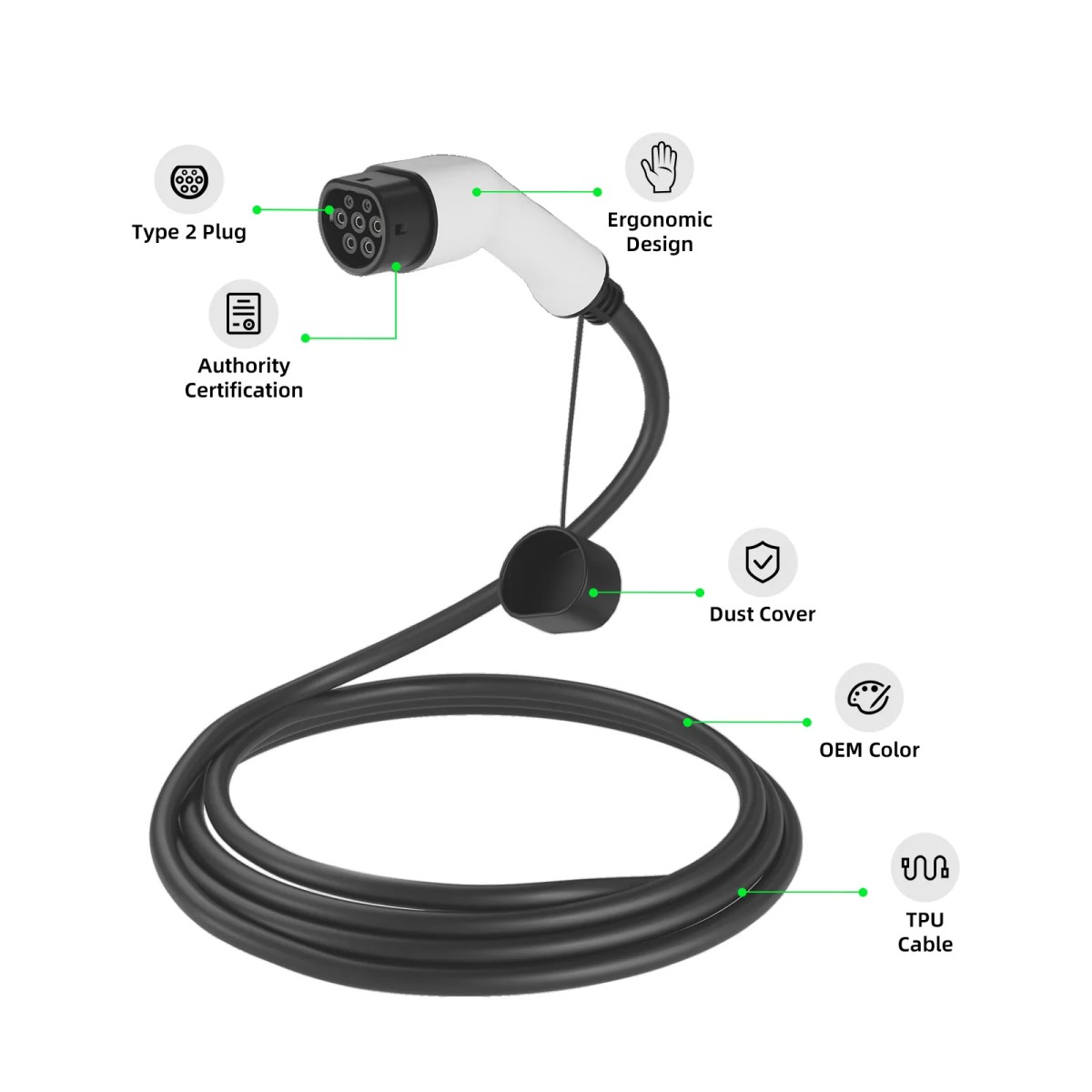
If you are manufacturing or field-assembling tethered wallboxes, you can't just slap a double-plugged cable onto the unit. You need a dedicated Type 2 to open end wire harness as a key internal component.
An open-end cable serves as a specialized station accessory: it comes with a factory-molded plug on one end and raw, pre-stripped pigtail conductors on the other. This lets your assembly technicians wire the leads directly into the station's internal terminal blocks or PCBA control boards.
Using a certified type 2 ev connector with cable harness built with open-end leads gives hardware teams three big operational wins:
Faster Field & Factory Assembly: Pre-stripped conductor ends slash wiring time for both production line workers and field electricians during wallbox assembly.
Reliable Outdoor Weatherproofing: Factory-molded plug handles prevent water and dust ingress far better than field-assembled connectors, avoiding early hardware failure.
Simplified SKU Management: Stocking a standardized type 2 tethered cable component lets you build multiple wallbox enclosure variations without changing your core wiring setup.
Superior Temperature Control & Quality: The EVSEClub Cable Solutions
When a tethered cable accessory fails or overheats at a commercial site, the whole charger is forced into thermal throttling or complete outage until a technician drives out to fix it. That’s why selecting a rugged, fully compliant IEC 62196 type 2 cable built with exceptional heat dissipation is critical for protecting your brand's downtime metrics and warranty budget.
At EVSEClub, we engineered two distinct open-end charging cable components specifically designed for long-term commercial stability and low temperature rise:
1. The Flagship Standard: EVSEClub G1.0 Series
Built with high-purity oxygen-free copper conductors and optimized terminal contact resistance, the EVSEClub G1.0 Type 2 to Open End EV Charging Cable maintains exceptionally low temperature rise even during hours of continuous 32A/480V operation. Its TUV-certified TPU sheathing ensures long-term weather resistance without degradation.
2. Next-Gen Ergonomics & Styling: EVSEClub G2.0 Series
Taking thermal performance and handle ergonomics a step further, the EVSEClub G2.0 Type 2 to Open End EV Charging Cable features a refined, compact plug body designed for seamless wallbox integration. Like the G1.0, the G2.0 uses TUV-compliant TPU jacketing (never non-compliant TPE) and guarantees strict temperature rise control to protect your PCBA components under heavy commercial loads.
Why B2B Partners Choose EVSEClub Harnesses:
Industry-Leading Temperature Rise Control: Minimal heat accumulation at terminal pins prevents thermal throttling and protects internal PCBA electronics during long 32A charging sessions.
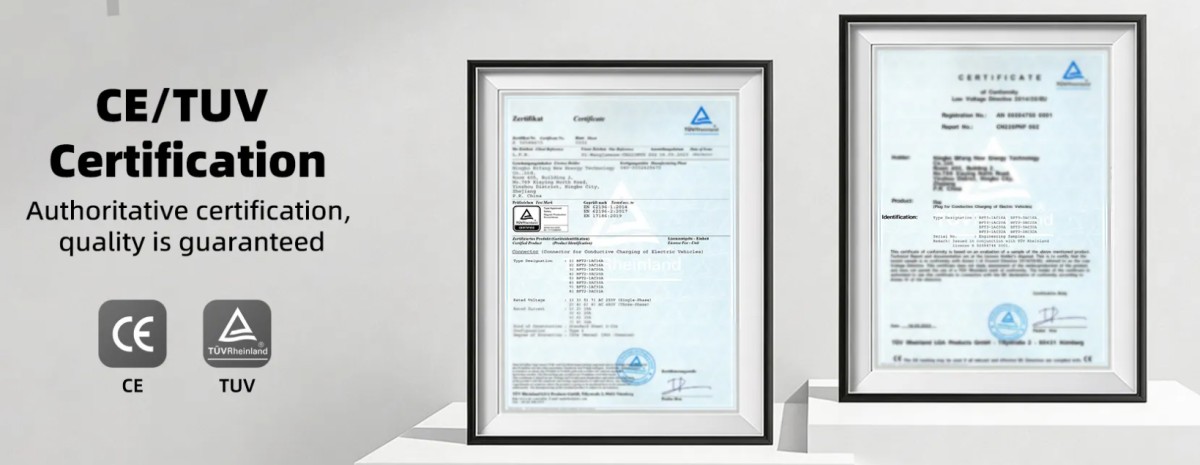
TUV-Approved TPU Sheathing: Heavy-duty TPU outer jackets resist oil, UV exposure, drive-over crush damage, and freezing temperatures while maintaining rock-solid insulation quality.
Built-in Brand Customization: Both G1.0 and G2.0 feature dedicated blank customization zones on the plug handle so you can apply custom brand colors to match your corporate wallbox.
Certified Safety Endorsements: Fully compliant with CE, TUV, UKCA, and CB standards.
Final Verdict: Which Setup Fits Your Business Model?
If you are supplying private home users who prioritize a clean wall aesthetic, untethered socketed stations have their place. But if you are building commercial networks, workplace charging, fleet depots, or high-value residential wallboxes, a tethered configuration powered by a reliable, low-temp type 2 tethered ev charging cable component delivers the safest and most stable charging experience.
Ready to upgrade your station hardware or request custom OEM cable samples for G1.0 or G2.0?
👉[Contact the EVSEClub Team Today] to speak with our engineers and get bulk pricing on our open-end charging cable solutions!